

Only Fools and Horses.... became one of Britain's most successful comedies of all time, with millions tuning in. However, the first series, shown on BBC1 with little fanfare from September-October 1981, performed poorly in the ratings and almost saw the show cancelled as soon as it had begun. Please join me as I rank the first run from worst to best...
So, Only Fools and Horses.... Yes, in talking about the show here, we're going to be incredibly anal and spell it as it appears onscreen, with a four-dot ellipsis, or its acronym of "OFAH". Maybe on occasion "Only Fools".
Yet in studying and critiquing the show in articles, it must be acknowledged that we're taking our lives in our hands somewhat. Fans of the sitcom can be aggressively passionate about the show, where discussion of the episodes, particularly anything even remotely negative, is reacted against most strongly. When there are still conventions running, and tickets are £450 if you want to include a "meet and greet" photo with David Jason, then such devotees of the show will take umbrage at someone pointing out if a boom mic enters the frame, and to some fans - not all - any criticism is sacrosanct.
It's a world where writer John Sullivan is a "genius", and where any attempt at discussing the various plots is met with the stern insistence that you just watch and enjoy it. Part of this is probably down to the fact that the show became more and more middle of the road as it went on, so that towards the end you didn't need to think about it. It veered towards lowest common denominator stuff, all tics, sentiment and catchphrases, and the broader and less sophisticated it became, the more popular it became with the masses.
These early series are a different proposition. A very good - sometimes even great - sitcom, it was left-field for the BBC of the time. The lead character gets by on deals that are frequently illegal, while his kid brother now works with him after being banned from art college for smoking cannabis. Add to this a topless calendar in their flat and flashes of earthy language and The Good Life this definitely wasn't. (This is the first episode to include the term "Berk", sometimes pronounced "Bark" in later episodes... both of which are short for "Berkeley Hunt", cockney rhyming slang for...)
It was 1981, a time of three million unemployed, and strikes, recessions and unions are often referenced in these early episodes. In the 1970s the UK was producing over 2 million road vehicles... by 1980 this had dropped to just over 1.3 million. Del's prediction that "Britain's future lies fairly and squarely in the second-hand car game" perhaps isn't too wide of the mark.
There's world building in this one, with the first brief appearance of a used car salesman associate of Del's, "Boycie". His sole scene here is less than 2 minutes without much in the way of humour, and the character is a lot more sinister in these earlier ones than he became.
The sitcom Citizen Smith (1977-1980) was pivotal in the genesis of Only Fools and Horses.... The first sitcom by John Sullivan, he developed it after getting some writing gigs on shows like The Two Ronnies. Smith was broader than OFAH initially was, very much more a "sitcom", but was also very charming and likeable.
Its success led to the BBC getting Sullivan to develop another sitcom. Not only had there been an episode of Citizen Smith called Only Fools and Horses, but another episode, The Letter of the Law, featured John Challis in a role as a policeman. In his 2011 autobiography Being Boycie, Challis referenced how this helped his role in Only Fools: "Without any specific instructions from John [Sullivan] or [producer] Ray [Butt] on how to play him, I brought on a version of the character I'd created for Citizen Smith and, using my own quite intimate knowledge of second-hand car dealers, I made the appropriate adjustments, and Boycie was born."
Not only do we meet Boycie, we also get to hear about unseen characters - a friend of Rodney's called Mickey Pearce, along with a suit seller known as "Paddy the Greek". While Paddy became one in a line of referenced characters we never actually get to see (along with other associates including "Monkey Harris"), Mickey Pearce was brought to life in the third series, and became a semi-regular of the show.
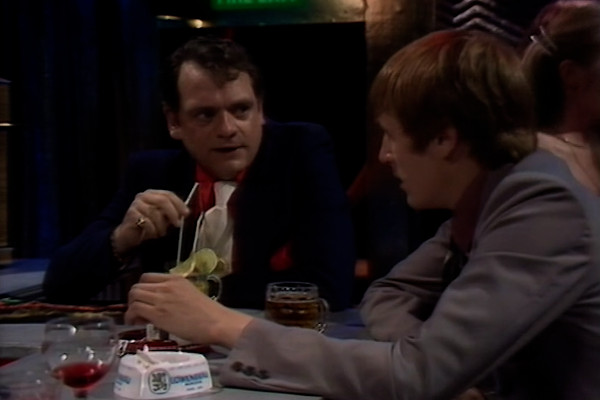
So, was John Sullivan a "genius"? No, of course he wasn't. But he was a good, sometimes very good script writer who knew how to connect with a wide audience. He was also often guilty of reusing old gags to pad things out. The biggest laugh from the studio audience in this one comes with Del pretending Rodney is a tennis player in order to chat up two women in a nightclub - Rodney greets the question of whether he prefers grass or astroturf with "Oh, I don't know, I never smoked astroturf". It's a nice line, but it was originally attributed to American quarterback Joe Namath in the early 1970s.
Very much a snapshot of the early 1980s, some of the content is dated, including Rodney literally going "bum against the wall" when they accidentally walk into a gay bar. But it's not without its moments, and none of these first series episodes are bad. This is a fine episode that only comes last because I preferred the six above it.
The second episode to air, it reportedly dropped a third of the viewers from the first episode, illustrating that whatever charms the first episode had, it didn't really catch on with the viewers straight away. Just 6.1 watched compared to the 9.2 million of Big Brother... when it was repeated in 1987 it was 7th in the charts with 13.2 million tuning in.
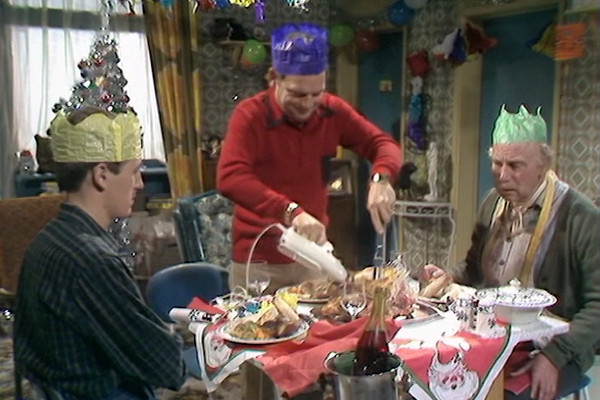
Last of the Summer Wine was the BBC sitcom given the honour of a Christmas Day broadcast in 1981... Only Fools and Horses.... didn't air until the 28th of the month, pushed into a 9:55pm slot.
It's an interesting direction to take a Christmas special, in that none of the characters really want to be there, and express how bored they are with the day. There's also some of the political referencing the show went in for, with talk of Rodney going on a hunger strike because of US cruise missiles being kept in the UK, and charity Christmas cards for the treatment of drug addiction.
It's set up as an episode where nothing happens, the despondency of the characters mirroring the attitudes of viewers at Christmas. ("Everyone's bored! Christmas is a religious festival, it's meant to be boring!") Yet this melancholy Christmas gets uprooted halfway through when Del and Rodney decide to go out to a club for the evening.
There's some racy moments in the second half of the episode, with Del talking about Rodney pulling his cracker alone before gesturing to his crotch, or suggesting that Rodney is into underage girls. But generally things get slightly flat, as "Del and Rodney on the pull" had already been done in Go West Young Man, and it seems something of a reprise.
A point of trivia for this edition is that the episode title is taken from listings magazines, as it's the only one without an onscreen title. The ratings for this first series were so low that the majority of them didn't make the ratings published in newspapers, as they were only listing the Top 10 per channel at this stage. (The newly-formed Broadcasters Audience Research Board - BARB - wasn't even printing viewing figures at this point, just chart positions, with Big Brother 9th on the BBC1-only chart.) As a result the viewing figures for this first run are gleaned from archive BBC pages, which cite this Christmas special as being watched by 7.5 million.
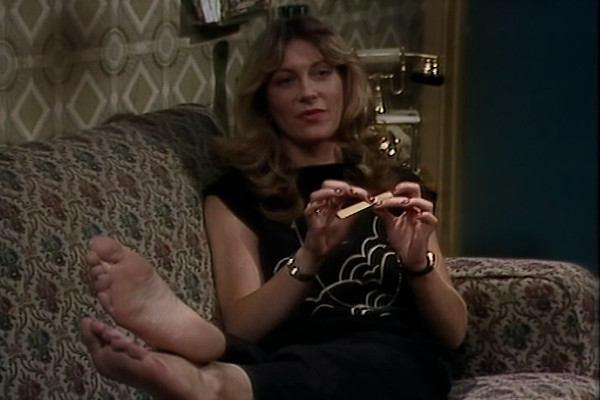
Del meets an old fiancée, and gets back together with her, moving her into the flat, much to Rodney and Grandad's chagrin. It's a decent episode, and gets off to a good start, though perhaps the problem is that there's simply too much plot for a half hour sitcom, and events feel rushed.
A very Del-centric episode, David Jason was actually the last to be cast out of the three leads as the production team weren't sure he was right for the part. Already a known name, as he'd appeared in sitcoms including Open All Hours as "Granville" (and, more importantly for this site's demographic, he'd done all his Blankety Blank appearances before Only Fools began) but he still wasn't felt to be quite right for the part of a Cockney wideboy.
In his 2013 autobiography My Life, David Jason described how he was eventually cast because the chemistry between the three of them worked. He noted: "I remember saying, as we sat there chatting, 'You know, I don't think this is a sitcom. I think this is a comedy-drama.' I felt able to say that because of the clear dimensions of the characters: they weren't Terry and June, they weren't designed-for-sitcom figures. They were real people who just happened to be funny. I felt very, very excited indeed."
Interestingly, trailers for the first series named Nicholas Lyndhurst first, possibly because he was known for his sitcom roles in Butterflies, and, to a lesser extent, Going Straight... or maybe the BBC just weren't all that bothered either way.
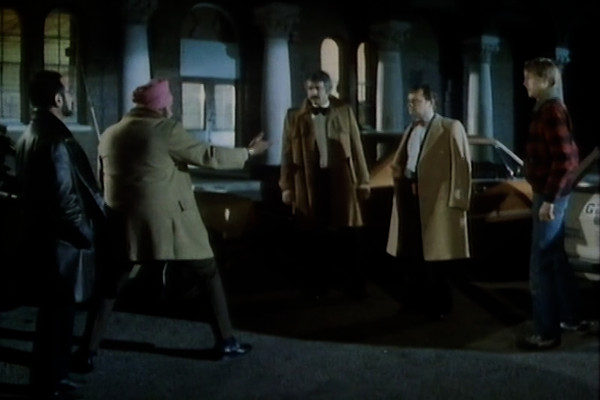
An episode that improves on repeat viewings, as Del and Rodney get involved in a caste war between two Indian businessmen. It can seem a little patronising having John Sullivan write characters of a different race (there's a corny "all white people look alike" routine towards the end) but then that's largely the point. For the two immigrants are - spoiler - not really in a caste war, but just taking advantage of peoples' bigotry and conning them.
There are some small plot holes here. Del only gets to spend time with one of the rivals because Rodney stupidly drove off and left him... and as all they con out of Del and Rodney is £2000 (around £10,000 today) then is it really worth the effort when expenses have been worked out?
Still, such things don't matter too much. This is the most plot heavy episode of the first series, and as such, there isn't much in the way of humour compared to the other episodes. With exposition needed to explain various events, the gags just rely on stuff like Del kicking a man in the crotch... not really the show's finest hour when it comes to comedy, but the plot keeps things interesting.
It's really a show trying to find its own identity, as with a lot of the first series. It's one of only three episodes not to feature the flat (followed by series three's Who's a Pretty Boy? and series five's The Longest Night) and it's the only episode from the first three series where Lennard Pearce doesn't appear.
As this is only the third episode, then viewers wouldn't have thought such things were unusual at the time, though there is one item of familiarity: when Rodney drives off, Del uses the term "plonker" for the first time. It's fairly novel here, and, while it may have felt like it became ubiquituous due to impressionists, it's only used 55 times in total over 64 episodes, including a couple of occasions where a character other than Del says it. (Or 56 over 65 if you count the 1982 short Christmas Trees.) 23 of the 61 episodes after this one don't even feature the phrase at all. So, yeah, it's a lot, but it's not quite the plonker tourettes you may have remembered. Now, is that a nerdy enough stat for you, you plonkers?
Lastly, a lot of OFAH episodes are edited on various releases, as we'll discuss as we go along. For this edition, look at the most '80s part of it around 22m in... a montage of still photographs showing Del and Rodney making some cash by flogging their things. The sequence was originally broadcast with Pink Floyd's "Money" playing under it, though the version you'll probably see these days is more likely to have some generic stock music replacing it due to rights issues.
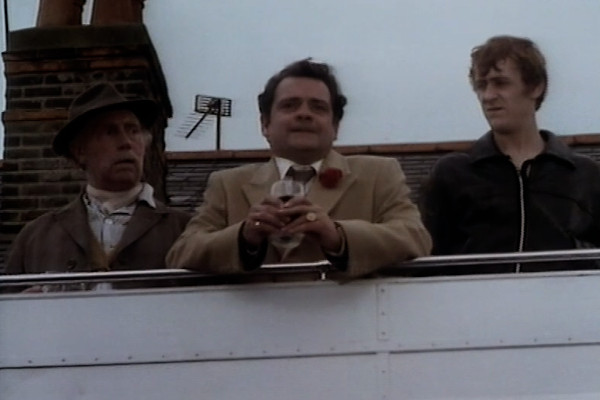
Sometimes sitcoms don't have to be constantly "ha ha" funny. It may sound counterintuitive, but The Offer is a classic episode of Steptoe and Son (or Comedy Playhouse if you want to be pedantic) and Strained Relations is a classic episode of OFAH... both are far from their funniest episodes if you're just going by laughs per minute.
The show never really needed to evolve into the broad ensemble piece it became, because you've got all you need with the core trio. The plot to this one may not satisfy because it is, in effect, essentially plotless, but it gives viewers chance to spend time with the core characters.
Del has an idea to hire a bus for "Trotter's Ethnic Tours" ("[...] all those romantic places that you've only heard about in fairy tales. You know, the Lee Valley Viaduct. Eh? The glow of Lower Edmonton at dusk. The excitement of a walk about in Croydon.") but no one turns up. The fact that they spend the second half of the episode going nowhere is kind of the point. I'm not going to go as far as to say that this is OFAH's "Waiting For Godot", but it's all character. Naturally, if you think the peak of Only Fools comedy is Del dressed up as Batman, then it won't be one for you. But this is the show trying to plough its own path, rather than selling out for a larger audience.
Grandad's "It wasn't me, Del Boy... it was me brain!" always makes me chuckle, but generally this is more of a light paced one rather than a real gut buster. It's not a popular episode with fans, and one legitimate reason is the suplot all the way through that Del is secretly seeing Rodney's girlfriend behind his back while he's working. Del can be a selfish, unpleasant character at times, but it's not always nice to be so bluntly reminded of the fact.
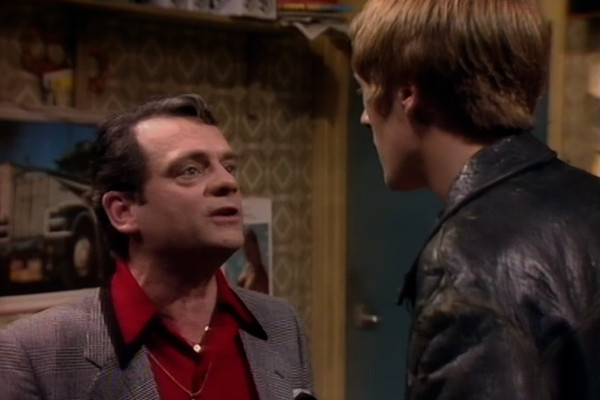
The expression "only fools and horses (work)" wasn't widely known when the show started, although it's such an old one its first appearance in The Times dates back to March 1857.
The theme music to explain the expression and the basic set up of the show was added to the second series, though surprisingly there are quotes from John Sullivan where he stated that it was already written for this first run, but just not used by the BBC. Instead what we get is a "light entertainment" jazzy theme tune by Ronnie Hazlehurst.
Hazlehurst wasn't without his talents, as his theme tunes for, say, Some Mothers Do 'Ave 'Em and Are You Being Served? (the latter co-written with David Croft) are genuinely inspired. And, in fairness, his theme for OFAH is a major earworm... but all wrong for the show.
The reason for its mention here is that you can get to hear a variation of it in the montage where Del looks for Rodney around 22'30m in. And the reason why it's important you get chance to hear it there is that many releases, streams and repeats of this first run all replaced the theme with the more familiar one (plus the closing credits song, "Hooky Street"), as if it never existed in the first place.
As for this first episode, it's a very good one, introducing all of the characters without seeming as if it's overly crammed with exposition. There are some good lines, even if the influence from Galton and Simpson can be plainly heard ("What's that rumbling noise? No, it's alright, it's mum, turning in her grave."), but the bitter undercurrents between the two leads really work well. With Rodney resenting Del's interfering presence in his life, you sometimes feel they might even come to blows.
One notable element of this first edition is that the audience don't always laugh, given that they don't know the characters. Trigger calling Rodney "Dave" doesn't actually get a laugh until series three, but here it's understandable given that they've only known Rodney's name for less than ten minutes. A joke that does get a chuckle from the studio is Trigger pronouncing a word wrong... which is retrospectively strange, given that it gets a double take from Del, and yet the mispronouncing schtick became a regular part of Del's character.
The most "'80s" episode of the run on the surface, in that it's based around the slightly unlikely premise that the Trotters have unwittingly bought the materials for a nuclear fallout shelter and decide to test it out. Three very different characters with very different mindsets spend their time arguing while trapped in a closed, claustrophobic environment.
Yes, you could argue that the set-up is contrived, though in 2026 living in a world under threat of nuclear annihilation isn't a dated concept anymore, sadly... how far we (haven't) come as a species in the 45 years since this first aired.
No, this episode won't be to everyone's taste, and a fair few of these very early episodes suffer because the characters shifted, so they retroactively feel slightly "out of character". But that's not the fault of the episode, it's because John Sullivan chose to take the show in a different direction, making it seem "out of place" when you compare it with later runs.
This is the show still a little edgier, with Rodney still into his weed smoking, being politically active, and... being into girls in school uniform. Such things shock now, and the show in 1981, while still mainstream enough to get onto prime time BBC1, was much more left-field than their usual fare.
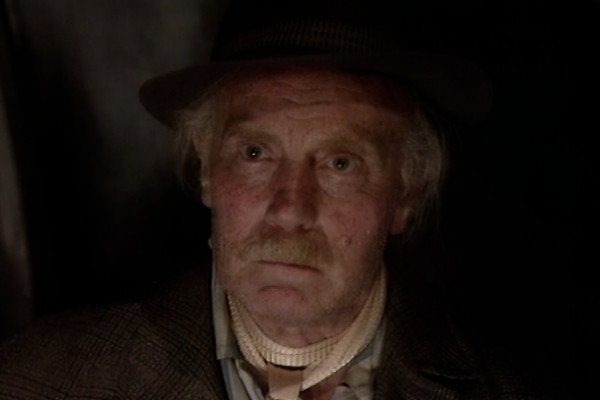
A lot of the quality is down to Lennard Pearce, who delivers great work as usual. There is a sense of the gears being adjusted heavily when it cuts to, as pictured, Pearce giving a speech on the horrors of war, it's not "organic", but it works. This isn't the funniest episode of OFAH - it's not even close to that - but it's an episode of OFAH with something to say. It's an episode with a nice line in black humour, from Del lamenting that today's generation don't have the gift of a war, to reflecting on how war is good for business.
A last point is that if you watch this one via ITV.com (where it currently resides, instead of BBC iPlayer for some reason) you'll see a warning marked "Contains some offensive racial language of the time". This is due to the use of the racial epithet "p*** shop", which is the first instance of the word in the series. It would appear again six more times, mostly in 1985, but also an instance in 1991.
John Sullivan's world aimed to depict a realistic portrayal of working class life, and so involved terms that many working class people would use. Not The Anorak Zone, it should be said, but a fair few people. This kind of thing was "realistic", particularly in a 1981 London setting where the population was still almost 87% white British.
There are usually two schools of thought on this, with some complaining about "woke", and others agreeing it should be censored. It falls in the middle here... adding a warning is fine. This is a sitcom that's 45 years old, and naturally has terms and phrases that would stick out in 2026. This article is not to judge such terms, but merely to acknowledge that by watching it, you're accessing a "historical document", and you have been duly warned. And the actual material itself hasn't been edited in any way... though I can understand why it would be if it were repeated on the BBC.