

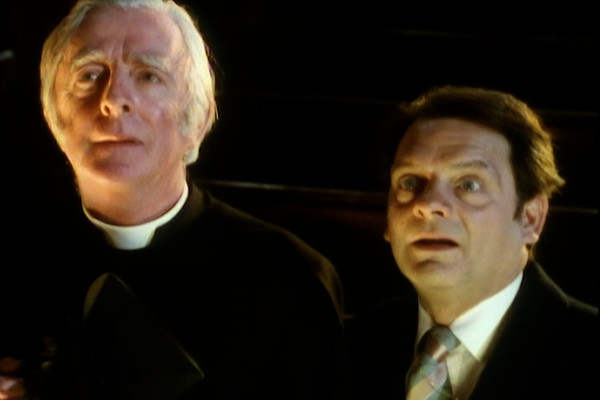
Del has selfless aspirations for once, as he uses a crying statue of the Virgin Mary at his local church to drum up publicity and raise money for charity.
Perhaps not the most memorable episode of the show, this is a very Del-centric encounter, where Rodney and his arguments with Uncle Albert just serve as a backdrop to the main plot of Del and the "miracle". This is the polar opposite of the series opener, where Del was ready to sell a baby – here he raises over £100,000 for a hospice associated with the church, and doesn't expect a penny in return. There's a decent twist where – spoiler – the "miracle" of the crying statue is revealed to be just rain, as Del had unwittingly bought stolen lead off the church roof.
It was over 22 years since the Steptoe and Son episode The Lead Man Cometh, so a relatively similar plot about lead stealing would be forgotten by most viewers. And it's not as if it's that similar, with the two rag and bone men conned into buying the lead from their own roof. What might be more easily remembered, however, is Grandad telling Rodney that Del used to raise money for a church roof in the first series: "He said it was a penance seeing as how it was him that nicked the old one. But after that he lost faith." It's the show contradicting its own history, Sullivan apparently forgetting the remark - or hoping the audience had.
So it's off beat and doesn't quite add up, but it's still a top four entry in this particular run. One thing to note is how much "aggro" there can be between Uncle Albert and Rodney at this early stage. Although they don't feature that much in this episode, Albert still throws Rodney's trumpet down the disposal chute and pretty much fronts him out over it. While there was an instance of Grandad threatening violence with Rodney - he tells him he's not too big for a clip round the ear in series three - Uncle Albert seems regularly ready to lay him out. It seems a little presumptious for someone who's only just moved in as a guest, no matter the provocation.
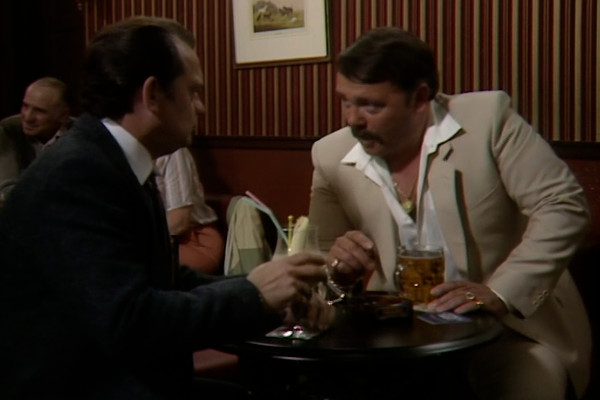
A fairly sweet episode that was reputedly due to be the last of the series. David Jason had said to John Sullivan over dinner that he wanted to move on and felt the series had run its course, and Sullivan planned to continue with a Rodney-based show called Hot Rod.
It sounds a little unlikely, but quotes attributed to John Sullivan confirming this can be found in 1998's The Only Fools and Horses Story by Steve Clark. Del was supposed to take the offer of an old friend, Jumbo Mills, to go to Australia without Rodney, who couldn't get into the country due to his drug conviction: "... in the meantime David changed his mind and talk of him leaving the show was forgotten and we started discussing the next series. By then I was too far into the episode so I just changed the ending so that Del says no to Jumbo's offer."
It's a crucial change, because while it's a good episode, it's maybe not a good last episode. Like a lot of the fifth series, it's very Del-centric, with Rodney and Albert pushed into their own subplots, and as a final send-off it's a little too brief. The arguing between the brothers may seem a little familiar at this stage, but Del going back on his plans to stay with his family is what elevates it.
The series had gradually risen in popularity, particularly during series four, but five saw a major step up in the ratings. This particular episode was second in the charts, only beaten by EastEnders (which appears on the TV in The Nag's Head) and had 18.8 million tuning in. Altogether the fifth series (not counting the specials) averaged at 3rd place in the charts with 15.96 million viewers.
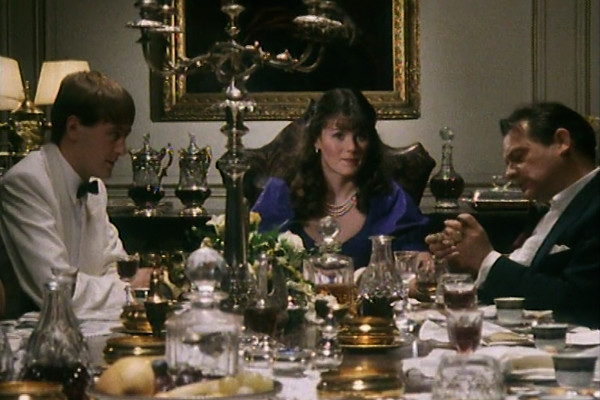
Rodney meets an artist who turns out to belong to aristocracy. However, a chance for their relationship to flourish is ruined completely by Del when he tags along to a banquet at their manor house and gets increasingly drunk.
Wait, hear me out. A Royal Flush is one of the most vilified episodes of the series, with even John Sullivan disliking it, but while the characterisation can be argued to be "off", the writing, the production and acting are among the best the series ever did.
Shown on Christmas Day 1986, it was third in the charts with 18.76 million viewers, 2 million less than the edition of Just Good Friends that preceded it. Just Good Friends was Sullivan's third sitcom, running roughly around the time of OFAH series 3-5, it was hugely important in terms of this special, as it was taking up a lot of John Sullivan's focus at the time. While he was very actively involved in OFAH, he wasn't involved in a lot of the shooting for this Christmas special due to his work elsewhere.
Recorded without a studio audience, and with no time to show it to one to record a laugh track, it's like a parallel world of the Trotters where everything is bleaker and nastier. Without an audience, David Jason plays into Del more as a pure acting role, and his efforts at portraying how obnoxious Del can be are shown in full.
It's excruciating to watch at times, as the show abandons its usual avenues of humour and instead almost invents the cringe comedy genre ahead of its time. If this special was watched in and of itself, it might be much more highly regarded. But it's painful to sit through, and sometimes doesn't feel like it belongs to the same show.
It's not that Del hasn't been nasty before and since. Take away the audience and many of the episodes would seem bleak. But his behaviour is so aggressive and over the top that John Sullivan asked for it to be edited for a DVD release. Around 18 minutes were removed, and audience laughter placed over the top.
It's something of a half successful "fix", whereby Del only comes over as a pratt, rather than aggressively obnoxious. Gone is his expanding on Rodney's drug conviction, or threatening to punch people in the face and whistling during a visit to the opera. But even then Rodney doesn't come out on top, as both versions end with him injuring his hand and Del squeezing it to cause him pain. Plus, as a purist, the original cut should be the one to watch.
So, if this edition is so problematical, why does it rank so high here? Well, it's complicated. Many fans would have this way, way down the bottom of the list, and, as stated, the circumstances behind the production were far from perfect. Yet the writing, arguably misguided, is involved, and Jason and Lyndhurst give some of their best performances in the roles. It's quite a well put together episode of television, it's just that it doesn't always feel like a well put together episode of Only Fools and Horses....
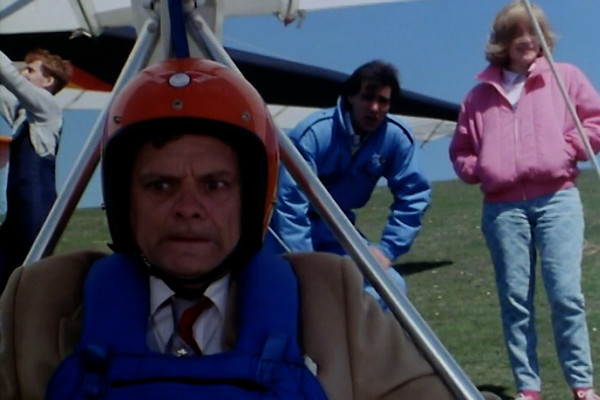
Del and Rodney both go to far lengths to impress Trigger's young niece, sabotaging each other in the process. It's an odd situation, in that you'd expect Trigger's niece to be morally "off limits" to the two brothers, particularly Del, who's stated to be over 20 years her senior. But the amusing situations and chemistry make it all work despite itself, particularly Rodney's vengeful nature when he promises to help Del avoid going hang gliding to save face.
But those 20 years of Del's. Some hardcore OFAH fans get incredibly defensive when continuity issues in the show are brought up, but with this run we're now up to 39 episodes (41 if you count the shorts Licence to Drill and Christmas Trees) and John Sullivan was busy working across three separate sitcoms. He perhaps couldn't be expected to remember every line of every episode... which explains how Rodney is referred to as being slightly younger than Trigger's 25-year-old niece, meaning he could also be 25, but younger, or still 24. When Rodney refers to Del as approaching his 46th birthday, he could be exaggerating to put the niece off Del even more, but there's no reason to suggest this is really the case. This means that the 12 year age gap of the first series has expanded to a 20 year age gap... and Del has aged ten years in the time it's taken Rodney to age two. (Events in series 7 suggest Del is 44 there, but there's no way of knowing if this is yet another continuity mess up.)
Let's look at some more trivia behind the nature of this episode. Between this and the previous article, a very insightful show was broadcast on U&Gold (formerly UK Gold) in late October 2026, the two-part The Lost Archives. A show based around cut and unbroadcast scenes from the show, it didn't feature much before the sixth series, so I felt it was safe to press on, though there were some interesting moments from the Grandad era, such as an alternate cut where Del says "taking the wee wee" just in case censors complained.
The concept of the show featuring Del repeatedly saying "wee wee" is quite an amusing one, but more insightful was one of David Jason's reactions to the nature of censorship. We all know what things like "dipstick" and "plonker" really mean, but what about "wally"?
I'd always assumed it was a generally meaningless, almost schoolboyish slur of no real purpose. But in the second episode of The Lost Archives, Jason mentions that: "A wally was a pickled cucumber that they used to buy in the fish and chip shop. [...] But when you saw it, that is where the..." At this point he's cut off by Sue Holderness (Marlene) who finishes with the term "phallic".
What this means is that while we're still up to date with our "Plonker Count" (10 instances in the episodes in this article, 9 from Del and 1 from a man in the market in A Royal Flush) we haven't even been taking down the multiple "wallies" uttered in the show, including this edition's "vicious mind and general wallyness". So, do we go back and count all the various "wallies" to keep us up to score there? I guess we can leave it, as we also haven't counted all the "dipsticks" either.
In other trivia, then this episode introduces the slur for Chinese people, "ch***y", which gets a couple of uses. It's used once again in Video Nasty, twice in The Frog's Legacy, then never again outside of this run.
Perhaps the most significant element of Tea For Three is that it was instrumental in leading on to the show getting 50 minute episodes from series six onwards. The speech David Jason gives at the end to Rodney about his hang gliding incident was even longer, and was trimmed in the edit. Jason felt it was a shame that the episodes were regularly being cut down due to John Sullivan's habit of writing more material than could fit in a half hour, so went to speak to the writer about it.
In My Life, Jason recalled: "John agreed with me that the show could certainly work in longer episodes. We went to see Gareth Gwenlan, who was producing series six, and we set out our case for extending the show from half an hour to fifty minutes. Gareth said, ‘Well, a situation comedy is only thirty minutes. It won't sustain more than that, really.' I said, ‘Yes, that's true of average writers. But we're talking about John. And you must agree: we keep cutting gold.' Gareth gave it some thought for a while, and then gave the green light to go to fifty minutes."