

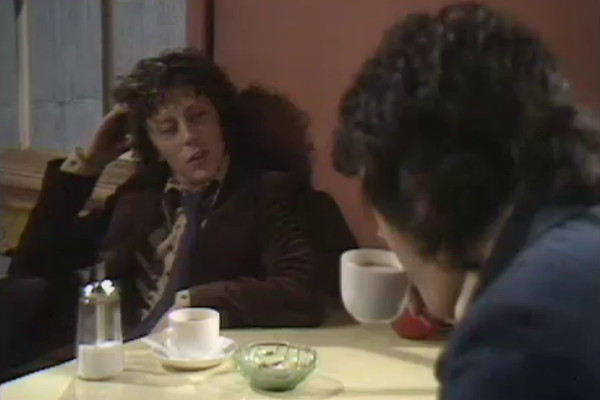
This fifth series has something for fans of the TV version of The Hitch-Hiker's Guide to the Galaxy, as not only does The After Dinner Game feature Mark Wing-Davey, Zaphod Beeblebrox himself, but this edition has David "Ford Prefect" Dixon as a man on trial.
However, the best Play For Today showcase for Dixon is Series Six's Jumping Bean Bag, a slightly offbeat tale that has him as a would-be entertainer, performing songs. This edition has him as Klaus Miller, a street tough, drug-dealing junkie. Now, Dixon isn't bad in the role, but it's cast so far against type it's hard to really accept things, particularly as his own well spoken accent continually slips out from under the "character". Possibly this is the point, as the obnoxious Miller does put on a "front" during matters.
There's strong support in the cast, including Richard Beckinsale as Miller's solicitor, but for a pretty straight drama about the law, it was oddly advertised in The Radio Times as a comedy. The play was eventually savaged in The Stage by journalist Audrey Henderson, who slated most of it (except for Dixon) and claimed: "If that was a comedy, King Lear is a Feydeau Farce. The Floater wasn't even black comedy, just a grey little story about the law."
The title, incidentally, refers to a case that's been moved aside due to required people being late, and so will have to be heard as and when there's a slot available throughout the day - a "floater". Nothing to do with Billy Connolly and his wee big jobbies.
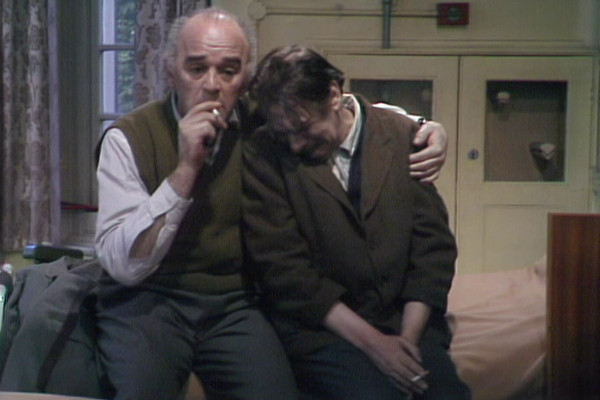
Roy Minton's most well-known association with Play For Today was as writer of the planned Series Eight episode, Scum. In the end result, Scum was pulled from broadcast and not shown until the 1990s, although a film version was made. So with Scum not broadcast as an official Play For Today episode, it means that Funny Farm is Minton's sole work for the title.
There's something ever-so-slightly "off" about Funny Farm, and it's hard to figure out exactly what that this. The leads are all fine, and there are some nice sardonic stabs at society. But for a feature-length play about time in a psychiatric unit, then there's a lighter feeling than is perhaps required, slightly more "light entertainment" than black comedy.
It could be that some of the supporting cast have psychiatric issues that lend themselves towards pastiche, such an Elvis-loving patient or an elder man obsessed with exercise. These characters aren't exactly played broadly, but there's a lightness of touch that maybe conflicts with the intent. It could also be that, like much of the TV of the age, the interiors are shot on videotape.
This isn't an issue in and of itself, as I grew up in this era, but from the perspective of the 21st century, it's perhaps something we unconsciously associate more with sitcom. It could also be that Tim Preece, playing the main help worker, went on to play Tom in The Fall and Rise of Reginald Perrin, which is a retroactive distraction. Though such things shouldn't be blamed on Preece, who gives a fine performance.
If all this sounds like detractions, then certainly Funny Farm isn't bad. In fact, it's pretty good. But it stumbles in comparison with Baby Love, which tackles themes of mental illness with intensity, all on film, and with continually uncomfortable moments. Funny Farm has its darker themes, but is considerably more "safe", if not exactly "feel good".
Minton (real name Davies) was quoted in The Radio Times as saying "Psychiatric therapy is fundamentally an agent for the state", which betrays an intent to craft something more cutting and brutalist, Scum for the mental health world. What instead comes out is something much more palatable, and as a result, slightly less challenging.
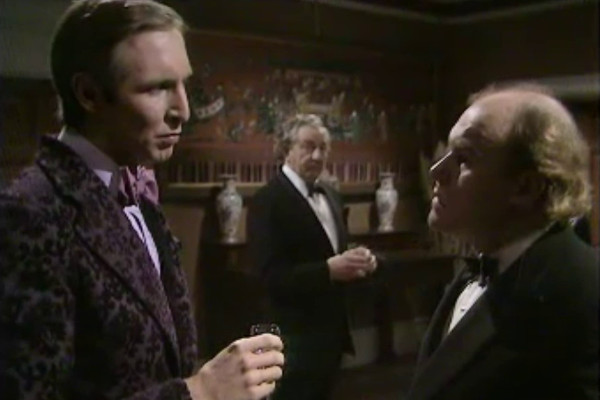
Following lockdown and Brexit, the UK's higher education sector is in a bit of a mess in 2025, meaning the themes of this edition are, if anything, even more pertinent than they were upon broadcast.
Mark Wing-Davey plays Professor Ben Good, a new university hire who focusses on the importance of profit. Before you've got time to say "Rishi", he's already disparaged the prevalence of education that doesn't lead directly to economics, and he clashes with an idealist lecturer, Mark Childers (Timothy West).
With any play that has political points to make, there is always the danger that it can be too "on the nose", and risk characters becoming mouthpieces for the writers, rather than speaking as people actually would. Yet there are witty lines ("If God had been a liberal we wouldn't have had the Ten Commandments. We'd have the Ten Suggestions.") and the plot involves psychological gamesmanship that becomes more apparent as it goes on.
This episode was written by Malcolm Bradbury and Christopher Bigsby. In 1982 Bradbury published The After Dinner Game: Three Plays for Television, which also included his solo works Love on a Gunboat (Play For Today Series Seven) and Standing in for Henry (BBC2 Playhouse).
In the book Bradbury explains how he'd been inspired by his own 1975 novel "The History Man", and how he came to work with Bigsby: "I wanted it to be a companion piece, but different. One way of making it different was to write it with someone else, and so I drew in a university colleague and close friend, Christopher Bigsby, with whom I’d enjoyed writing revue. Inevitably the style of the play was collaborative, too, somewhere between my work and his."
Both this play and the novel featured a social psychologist character, Flora Beniform: the character was brought to screen again in 1981 when The History Man became a series.
To end on a bit of trivia, then you've got Fawlty Towers connections here: West was married to Prunela Scales, while Connie Booth plays the innocent wife of Professor Good.
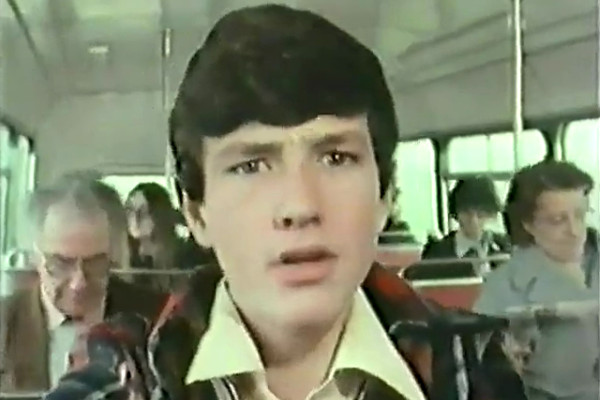
There's an odd choice in the crafting of this play. Quite a realistic storyline with a nice cast including Jeff Rawle and Jonathan Pryce, it nevertheless shows its hand right away by letting viewers know it ends with the death of a young boy, Billy (Gary Brown). Such a revelation isn't a spoiler... not only does the title of the episode pretty much give it away, but Billy's friend Bo (Paul Cahill, in what appears to be his only TV role) tells the audience within the first three minutes: "He gets killed in about an hour's time. Hey, don't switch off, will ya?"
The idea of characters speaking to the audience isn't original, of course, but the most unusual element is that it's discarded altogether before the 17 minute mark. For a 48 minute play that's just over a third of the way in, a really unusual idea to take away the full realism of what should be a gritty screenplay and then remove the distance between the viewers and the text without explanation.
This isn't a criticism, more of an observation, and Willy Russell's script works nicely with the direction of Viktors Ritelis, even if the ultimate "man with learning difficulties is dangerous" trope is a little old hat, and probably was at the time. Probably the most significant element is Andrew Schofield as Billy's other friend, "Cazza". Schofield, making his TV debut, went on to a highly creditable career, which not only included films such as Sid and Nancy (1986) but also two more episodes of Play For Today, including Series Eight's Scully's New Year's Eve (1978) and its superb spin-off series, Scully (1984).
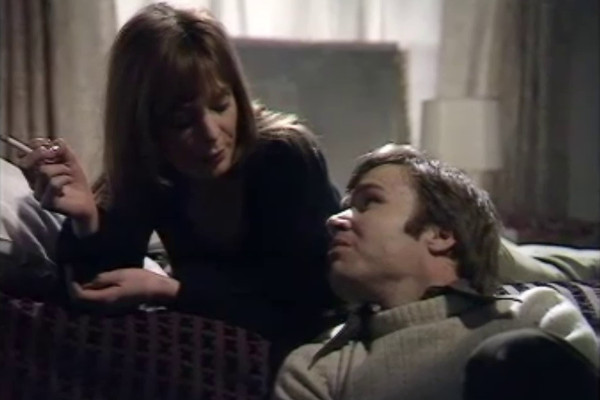
The two performers who appeared the most in Play For Today were Alison Steadman and Nigel Hawthorne, both with nine appearances each. Steadman tends to be more remembered, largely because she had more central roles (Hawthorne appears in supporting roles in both Child of Hope and The Floater this series) and because her plays were more celebrated.
This was Steadman's second play for the show (after Series Three's Hard Labour) where she plays the sister of a returning soldier played by George Sweeney (AKA Speed from Citizen Smith). Both plays also featured one of the eight most regular cast members, Liz Smith - here in a minor role as a lady in the street who possibly has dementia.
Play For Today often had a feel of "stage on the screen", so much so that some of the first series plays even had the subtitle "The Largest Theatre in the World". Alison Steadman thought along similar lines, describing the series in her 2024 autobiography Out of Character as "an enhanced version of weekly rep but for TV".
Perhaps understandably, Alison's recollections of Play For Today extend more towards her first play, or her first starring role (Series Six's Through The Night) or her two most famous plays for the show, "Nuts In May" and Abigail's Party. In fact, Alison refers to having done "two" plays when she came to record "Nuts In May", so it appears she forgot Taking Leave altogether.
It's a shame, because it's a solid effort. There's a connection between the brother and sister which I won't spoil, but you can hover over the image above and read the hidden text caption if you wish. A dysfunctional family, it contains some unsettling flashback scenes of the father (George Sewell) beating Steadman's character as a child, along with shots of Sweeney as a soldier in Belfast. There's always the feeling that something unpleasant is about to happen, and it's not really uplifting in any way, albeit generally striking.
Yet the play was given a largely negative review by journalist Michael Ratcliffe in the following day's Times. Ratcliffe's admittedly accurate criticisms included the observations that: "There were potentially several plays in Joyce Neary's Taking Leave [...] In the space of 70 minutes none of these was given the attention or presented in the style they required [...] the familial bickering was often repetitive and monotonous."
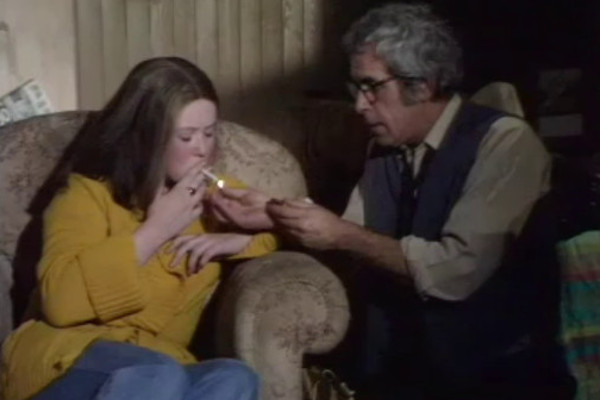
It's maybe a little too simplistic to suggest that Play For Today was just a continuation of The Wednesday Play (1964-1970) with the title changed so the BBC could show it on different days. But.... that's pretty much exactly what it was.
The two main producers from the last series of The Wednesday Play - Irene Shubik and Graeme MacDonald - produced every episode for the first Play For Today series, barring a couple of plays brought over from Canada and slapped under the title to boost the numbers. By the time of this fifth series they'd both begun to fall away from the show somewhat, with MacDonald (credited in this fifth run as McDonald) producing just half a dozen episodes and leaving after the seventh series.
Irene Shubik had fallen away further, leaving after the sixth series, and this particular episode was her sole contribution to this fifth run, after being absent altogether for the fourth. Shubik had published a book in 2000, Play For Today: The Evolution of Television Drama, which we'll look at in more depth if we ever cover the first three series, where most of her work is concentrated. Eleanor, sadly, gets only a fleeting reference in her book, whereas other productions get more thoughts behind them, including the following year's Rumpole of the Bailey, which went on to be spun off into its own series.
Eleanor's a worthy piece, if a little tonally odd in places. Pauline Quirke stars as a schoolgirl who feels she isn't listened to, so we get the odd narrative conceit (for the programme) of being able to hear her thoughts. This makes the episode seem lighter than perhaps intended, particularly as it contains darker moments, such as an open ending that doesn't confirm what will happen to the isolated girl.
There's also a strong guest performance from Kevin "Lynx the Sontaran" Lindsay, pictured, who may be an innocent lonely man who longs for company, or who may be something a little more noncesensical. Pauline Quirke gave a fleeting mention of the play in her 2012 autobiography Where Have I Gone?, including the revelation that "I'd helpfully mucked up the continuity by going and getting my hair cut."
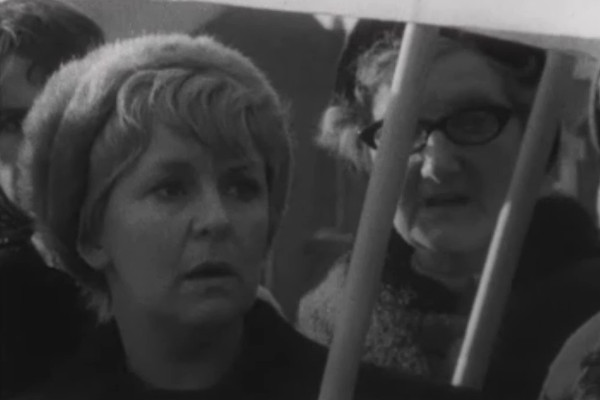
A controversial dramatisation of a real strike that took over large areas of Leeds in 1970. Shot in black-and-white and with confessed inspiration from Eisenstein, it took over two years to get it produced, and was the most expensive play made for the BBC at that time, with a budget of £150,000. (Around £2.5 million by 2025 standards.)
The language used in the play was Earthy for the time, but in 2025 would probably be regarded as mild, particularly as this was, like the rest of series five, shown in a post-watershed timeslot. (The majority were scheduled for 9:25pm, three of them 9:35pm.)
The lengths of Play For Today episodes vary, with this fifth series averaging at 73 minutes (not including Dandelion Clock), or 72 minutes, 51 seconds if you really want to be exact. Yes, I worked it all down to the second, like a complete nerd.
This opening edition of the fifth run is the third longest episode of Play For Today, with its 1'57'03m length just 17 seconds shorter than Series Fourteen's Z for Zachariah - though both are dwarfed in length by the colossal United Kingdom from Series Twelve, which runs to a mammoth 2h 26m and 27 seconds, fact fans.
It's actually this length that works against the piece, as when a character complains that there's been too much shouting, after nearly two hours you can't help but agree. It starts off brilliantly, but towards the end you feel that it may have gone up one place in this ranking for every five minutes it had shaved off the runtime.
A large proportion of this site's demographic will probably remember Did You See..?, a TV discussion programme chaired by Ludovic Kennedy that ran from 1980-1990. (And was briefly resurrected in the early 1990s with Jeremy Paxman.) However, how many remember In Vision (1974-1975)? Rather than Ludovic and three guests in chairs having a chat, this was more of a studio discussion show that ran for three brief series on BBC2. The day after Leeds United! aired, In Vision dedicated an entire episode to the play, an interesting debate with some prickly moments for the time.
One thing that perhaps can't go unmentioned is that this tale of striking factory machinists gives top billing to Lynne Perrie and has a small role for Elizabeth Dawn. Coronation Street viewers would have seen Dawn as Vera Duckworth two months earlier (and as unrelated characters in three earlier episodes), but it was a one-off until the character started to become a regular in 1976. Perrie's Ivy Tilsley had appeared in 21 episodes in 1971-1972, but was absent during 1973 and came back in the same episode that Vera debuted, August 19th 1974.
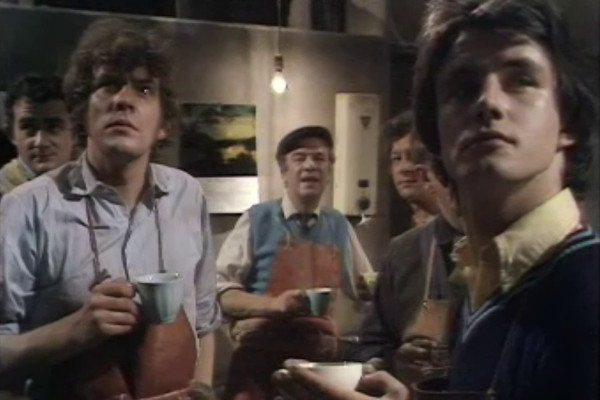
Shot on a single set (in Glasgow's Studio A), this was a 1973 stage play adapted for television. Writer Roddy McMillan also stars as Bob, the gaffer in a glass factory where conflict and violence threatens to erupt any minute. Andrew Byatt plays 16-year-old Norman "Norrie" Beaton, a young apprentice who suffers increasingly bleak bullying and intimidation as his day goes on.
Finding ratings for these episodes of Play For Today is difficult, as the show was very much a niche production. While nostalgia shows will look back and praise it, and rightfully so, they'll also give the impression that half the country was tuning in. They weren't. BBC research published at the time stated that Leeds United! was watched by 6 million, Gangsters "about" 7 million. The average for this show in this period was around 4.5 million.
It's difficult to assess how this compared to the published National Top 20, as newspapers tended to use ITV's method of ratings compiled by the Joint Industry Committee for Television Audience Research (JICTAR), which, at the time, reported on millions of homes, rather than individual viewers. The week that Gangsters aired, for example, the 20th-ranked programme (a Norman Wisdom show) had ratings of 6.85 million homes, which would probably be upwards of 15 million individual viewers.
Unsubstantiated reports cite ratings of just around 4.4 million for The Bevellers. This is not to suggest in any way that ratings indicate quality, and, indeed, a series like this shouldn't be populist. But it's a sobering reminder that what the wider public watched in yesteryear doesn't always tie in with what is touted as classic television. Some doubters might suggest that I brought up the ratings on this particular entry because, while I enjoyed the play, I didn't have a lot to say about it. So cynical.