

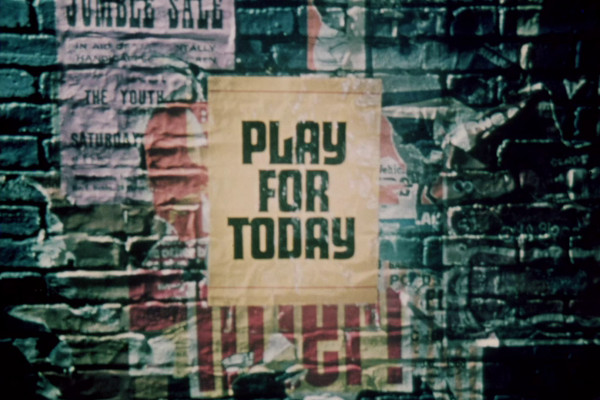
The Anorak Zone has previously looked at the fifth series of Play For Today, as well as revival and spin-off shows, so why not go back to the start and look at the first run of the show? This first series contained 23 episodes and ran from October 1970-June 1971. Please join me as I rank the first series from worst to best...
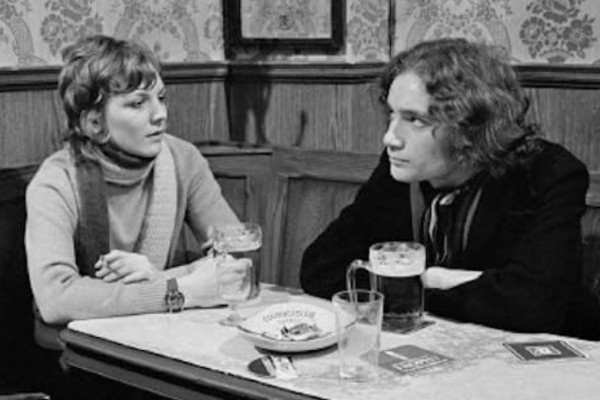
There's a large amount of episodes from the first four series of Play For Today that were wiped from the BBC archives. The third series was hit particularly badly, with 39% of it now missing, while series two and four combined have a quarter of their episodes wiped.
The first series saw 8 of its 23 episodes junked by the BBC. We'll look at the 8th in a separate entry for reasons that will be explained when we get there, but for this entry the 7 episodes that no longer exist and so are impossible to rate are: A Distant Thunder (by Maurice Edelman), Alma Mater (David Hodson), Circle Line (W. Stephen Gilbert), Hell's Angel (Anthony Read), Billy's Last Stand (Barry Hines), The Man in the Sidecar (Simon Gray) and Everybody Say Cheese (Douglas Livingstone).
Were these episodes any good? Maybe. Some were controversial (such as Circle Line, pictured, featuring a man sleeping with his landlady's underage brother) and others featured some recognisable names (such as Everybody Say Cheese starring Roy Kinnear). But, by virtue of the fact that they don't exist, they can't be effectively ranked, so they're collectively placed here for information purposes, while we move on to the rest of the run.
All seven episodes were shot in colour, despite the available image being in black-and-white.
The Write-Off was written by George Salverson and starred Gerard Parkes as a man made redundant but concealing it from everyone. Reddick was written by Munroe Scott and starred Donald Harron as the titular Reddick, a reverend working in a youth club.
Now, what do these two episodes have in common and why are they here? Were they wiped by the BBC? Well, yes. But it's not quite that straightforward. Neither of these two episodes were made "in house", they were productions from the Canadian Broadcasting Corporation that were used to bump up the number of episodes in the first run.
The BBC wiped their versions, which would have been fitted with the Play For Today titles (presumably), but the original tapes are still held in the CBC archives. So yes, in the name of research and all that's good, I contacted CBC and asked if I could get copies for personal research. They were rumoured to cost around £30 each and I was prepared - like an idiot with no sense - to spend that kind of cash so we could get a real look at them.
So, after liasing with the CBC archive staff, how much would it have cost me to get both episodes? $600, plus VAT. Read that again. $600. Plus. VAT. Over £320, PLUS VAT. Now, I'm prepared to put time, energy, and pure love into these articles, but £320? That's a lot of money. So although these two are official Play For Today episodes, they're not "real" ones in the purest sense, so we'll omit them from the ranking as "the two Canadian productions", and the screenshot here is taken from the series one general title sequence.
Unless, of course, you're a millionaire who really wants to see them ranked, then you can click the "Buy Me A Coffee" button below...
I Can't See My Little Willie was one of the episodes that were wiped by the BBC. However, while there's no longer any visual element you can explore, it's not entirely "missing" in the way the others from this run are, as the soundtrack still exists.
The play was one of several written by actor Douglas Livingstone, and featured Arthur, a middle-aged man attending a seaside pub for the Christening of his niece. The pub is one for traditional piano singalongs, such as "Danny Boy", and the song that makes up the title of the episode.
Producer Irene Shubik gave more detail in her book Play For Today: The Evolution of Television Drama (1975, revised 2000): "The most novel aspect of Livingstone's technique in telling the story was the introduction of a series of animated Donald McGill style seaside postcards, which our graphics designer made look like the characters in the play and whose captions reflected Arthur's views on his own life and the events befalling him. Arthur's first move, on arriving at the seaside, is to buy some funny postcards and from then on they take over. All the action and all the other characters are interpreted through them."
The available soundtrack hasn't undergone restoration work, so it can be difficult to hear it all, particularly towards the end. The play was also very much written for television, with, as Shubik attests, a strong visual element that makes it almost impossible to rate. It certainly sounds engaging, and you'd suspect it would rank quite highly if it were ever found. But due to its archive status it's unfair to rank it among the other episodes that are still fully existing, so it goes here by default.
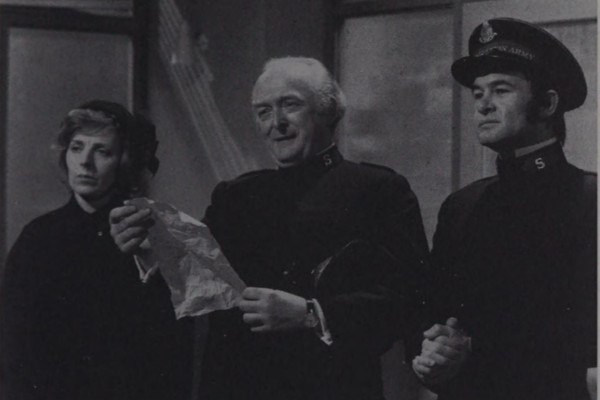
Due to the lack of visual material, then the screenshot above has been taken from Irene Shubik's book, but despite the unavoidable monochrome nature of this image, the production was in colour.
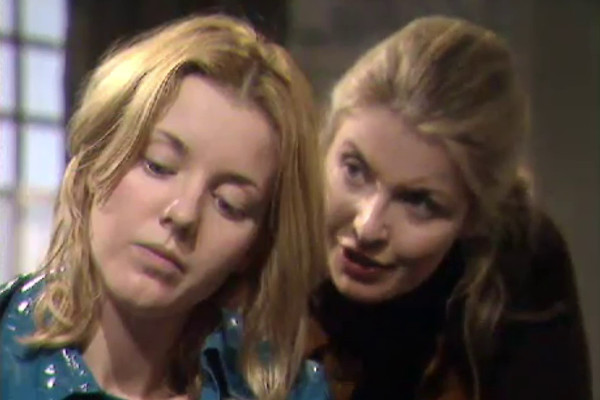
Hannah Gordon headlines this play as a social worker investigating how a small baby came to have three fractures. It is, in essence, a chilling subject, sadly one that's all too real today, and there may well have been people alerted to such things by this episode.
Yet such a serious, uncomfortable topic needs a similar depiction to carry it and draw out its strengths. Some of the supporting actors aren't exactly bad, and may indeed have seemed better at the time, but by modern standards the performances are just a little on the "big" side.
There's also a questionable production. You'll get boom mics dropping into the top of a shot, or what is very obviously an empty package of clothes acting as a "baby" for a scene. Or there's amusing moments, like the father (Neil McCarthy, likeable as always) telling his son he's got muddy boots on, and throwing them outside the caravan. Cue McCarthy taking off a pair of spotless wellingtons in a studio set made up to look like a caravan, and then cutting to outside film where the boots land in a field.
Perhaps the most compelling thing about this one is the adorable scenes between McCarthy and Mark Parr as his four-year-old son. Sometimes Parr will appear to ad-lib lines, throwing McCarthy, while other times McCarthy will be forced to prompt him. ("Can I what?" he asks the young boy at one point when he's not actually saying anything.)
Yes, such things are all of the time, and are to not only be forgiven, but even cherished, particularly in the latter case, but there's a serious strain when the subject matter cries out to be gritty and uncomfortable, and is instead almost quaint.
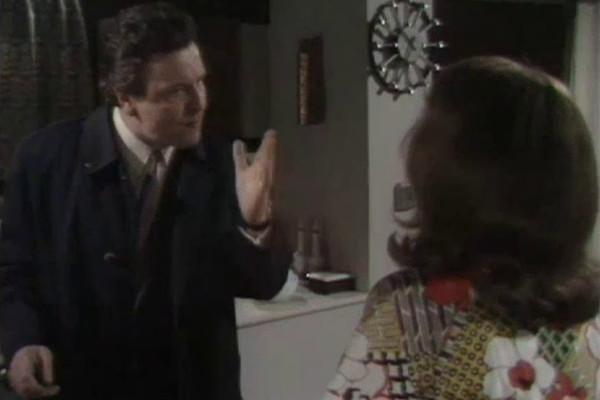
There's some uncertainty regarding the status of The Piano in the archives. While some reports suggest it's complete, the version I got from the BBC (which is supposedly the same one in the archives) has the first two or three minutes missing.
What were presumably the missing lines can be read in 1977's The Pressures of Life: Four Television Plays, which published the script by Julia Jones as well as three other plays. As always, we'll try to avoid spoilers as much as possible in these article, but it's necessary to discuss the ending of this one in order to discuss changes from script to screen.
The play features Glyn Owen as a council worker who can't get his own aunt and uncle out of their to-be-demolished house and into a new bungalow because the aunt won't leave unless she gets to take a piano with her. The published script has the piano being loaded onto the back of a removal van before fading to a scene with the elderly couple in their beautiful new home. The TV version has the bleaker resolution of the piano being hoisted out of the flat and dropped to the ground, smashed to pieces, as the aunt walks away with tears in her eyes.
It's a very "setty", theatrical work, shot on video tape, though the brief moments of external film do elevate things considerably.
There's talk of how few female writers Play For Today had, and it's not particularly something we'll look at in depth here. Not because such things aren't interesting in and of themselves - The Anorak Zone loves a bit of demographic talk - but because it's symptomatic of the time across a lot of television. Play For Today didn't seem to give women as many opportunities, and in 303 broadcast episodes, only 34 (11%) of them had female writers.
Those 34 were written by just 25 separate writers, with one of them (Series Eight's The Legion Hall Bombing) going out without a credited writer as Caryl Churchill didn't like changes to her script. A further 5 episodes were written by men, but adapted by source texts (novels/diary entries) from women, while Vera Blackwell translated a couple of plays from Czech writer Václav Havel. Lastly, there was one more play, Series Three's Making the Play which had a male and female writer. Plus, there's also the plays by Mike Leigh, which were built up via lengthy improvisations from their casts.
So, if this is "the nature of the beast", and we're looking at old TV which didn't always give equal opportunities, does the gender of the writers have any particular bearing on content? Well, who am I to say? The Anorak Zone is in touch with its feminine side, but isn't a woman despite this, so there might be some glaring lapses of realistic dialogue for women in episodes that go unnoticed here.
However, what's interesting with The Piano is that Julia Jones not only writes strong female characters, she has Glyn Owens' character yelling expressions of threatened violence at his wife, an interesting perception of how women see men. Or, at least, men in this particular case by this particular woman. Jones was the most prolific female writer for Play For Today, with three more scripts, and would go on to co-write the comedy drama Moody and Pegg (1974–1975), as well as adapt some children's books for television, including the subject of a Zone article, The Enchanted Castle (1979). She's perhaps best known for the comedy drama series Take Three Girls (1969–1971).
The Wednesday Play ran from September 1964-May 1970, and contained 176 episodes, including classics such as Cathy Come Home. Towards the end of the run, it had become perceived as too often being a "kitchen sink drama" with an overt left bias, which was driving away some viewers. In The Largest Theatre in the World: Thirty Years of Television Drama, former Head of Drama Shaun Sutton wrote: "It was for this reason, amongst others, that I changed the title of The Wednesday Play to Play for Today, to give drama's most important strand a fresh public image, and bring back the viewers that had seemingly strayed away from it."
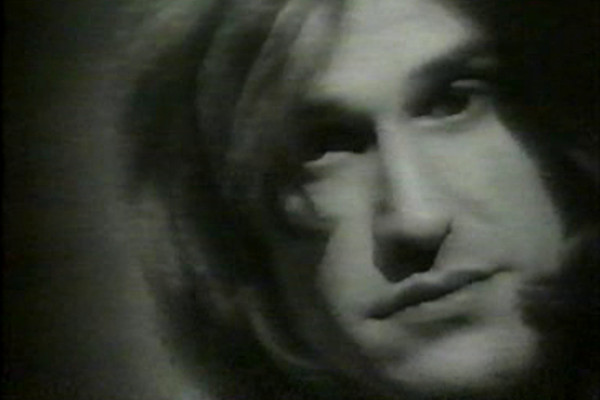
In Play For Today: The Evolution of Television Drama, producer Irene Shubik described the episode that would open the "new" series in October 1970: "This play, about a young man trying to win the world record for non-stop piano playing, had, in fact, originally been a radio play. As such, [...] it stood to have levelled at it the criticism that it was not original contemporary writing. However, to me it had two appeals: the subject was unusual and the script, at times, when the young man's futile pursuit obviously represented the monotonous routine of most people's lives, was moving. The other appeal was that of budget; it had a small cast and few sets. The most notable aspect of the production was, perhaps, the casting in his first part of Ray Davies of The Kinks as the piano player."
It's an odd play to launch a new series with. While The Kinks were a great British band, and had only just dropped out of the Top 40 with "Lola" when this aired, it's curious to wonder how much cross-over appeal there was between the audience of the former Wednesday Play and fans of The Kinks. There's also the fact that Davies wasn't an actor and the plot is very esoteric. Still, while no one is likely to mistake Ray for a prime Marlon Brando, he does an okay enough job, and the core plot is suitably different.
The Long Distance Piano Player was first shown as a reported 80 minute play, but was repeated in 1972, trimmed down to 61 minutes as it was felt it was overlong. It's this 61m edit that exists in the BBC archives, and only as a 16mm black-and-white film print, whereas it was made on colour video tape.