

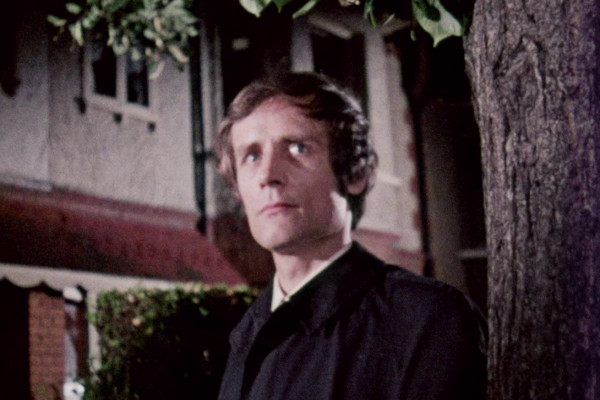
A narratively satisfying play by Colin Welland, featuring a shy loner integrating himself into suburban church life by deceit. Tony Calvin plays a man who the audience are immediately made suspicious of, and the fragmented timeline features a vicar discussing him with some legal counsel... yet the mystery is what exactly the man is alleged to have done. That particular plot resolution won't be discussed here to avoid spoilers, but over the course of 75 minutes the audience are led to believe it's something highly sinister.
Tony Calvin is very good as the isolated man, who goes by the name of "Henry", though if there's one criticism it's that the play doesn't really show us the charismatic side of the character that charms the congregation, we're just told he has. Even social interactions with him are depicted onscreen as awkward, whereas the play, based on a true-life anecdote, involved a man who was far less conspicuous and fitted in more easily.
Occasionally some lines contain poetical dialogue that people perhaps wouldn't actually say in real life - "It's as if he's in constant chaos - reaching for outstretched hands that just that crumble on his grasp" - though this speaks more of the base level of communication in modern life, rather than a fundamental issue with the script.
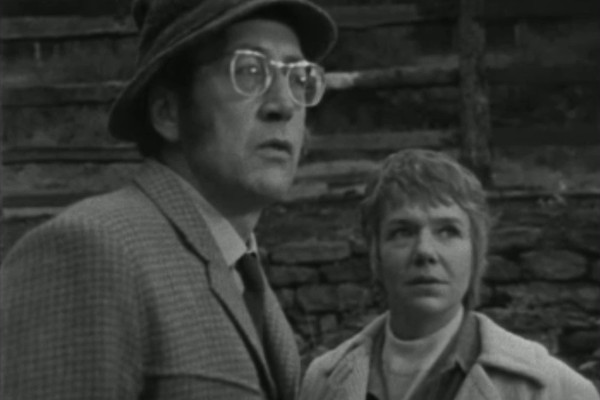
At date of writing, four of the episodes from this run have been made publicly available to buy. The Lie appears on the Play For Today Volume One BluRay Boxset, The Hallelujah Handshake is on the Alan Clarke at the BBC BluRay Boxset and The Rank and File appears on the Ken Loach at the BBC DVD.
Robin Redbreast is different, in that while it can be bought on its own BFI Robin Redbreast DVD, it's the only one of the four to not exist in its original form. Robin Redbreast was shot on colour videotape, but it was junked by the BBC, leaving just this 16mm black and white film copy. Although it's not in the interests of purity to say so, it might be one time where it did the show a favour, this story of increasing dread perhaps faring better in darker hues.
This play was broadcast almost exactly three years before The Wicker Man was released in cinemas, although the inspiration for the film - the novel "Ritual" by David Pinner - was released in 1967. As there's perhaps never been a post-1973 review of this play that doesn't mention The Wicker Man, we'll try and avoid it and instead focus on something different: TV in TV.
There are several episodes in this first series that feature characters being involved in or watching television. The Fox Trot doesn't really count, as it's intentionally satirical, but other instances see such things as a TV reporter being asked about Coronation Street in The Rank and File, and Antony Hopkins having a brother who's a TV presenter in Hearts and Flowers. In Robin Redbreast the main character is a television script editor.
While they say "write about what you know", having people on TV discussing or working within said medium always draws attention a little too closely to the artifice for me. For if the lead character is script editing for television, then what would she be watching on BBC1 at twenty past nine on a Thursday night? However, such things aren't of particular importance, more just a casual observation.
You know what, though? This episode is quite like The Wicker Man...
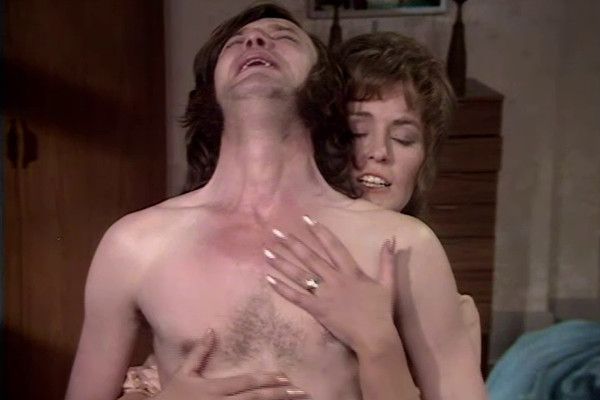
The first of eight Play For Today scripts by Dennis Potter, although one for Series Six would go on to be banned. Potter is an undoubtedly a talented writer, and this play has an appropriately high ranking. Yet plagued by ill health throughout much of his life, Potter would use this as a regular trope, mixing it with sexual and social taboo-breaking. Essentially he's the kind of guy who would write a play about a man in a wheelchair saying Hail Marys while licking mushy peas off the prolapsed anus of his own mother... then worry that it was too mainstream and family friendly.
Angels Are So Few is quite restrained by his later standards, featuring Tom Bell as a man who may or may not be an angel, and Christine Hargreaves as a tired housewife who decides to seduce him. As with a lot of Potter's work, we're challenged by what may or may not be "real", and it's never spelt out whether the religious elements are all just a fantasy of the mind.
While it's noted that this was Potter's first script for Play For Today, we must again return to the fact that when it was commissioned he was writing it as part of The Wednesday Play, where he'd had eight scripts made, most notably two with Keith Barron as politician "Nigel Barton".
Around the same time Potter had been commissioned for a follow-up play featuring Barton actor Keith Barron as a playwright, based heavily on Potter himself. The follow-up play, Only Make Believe, didn't get made until Series Three, and Potter believed that it was originally intended as just the middle section of interlinked plays. In the 1993 book Potter on Potter, the writer was quoted as saying: "My memory is that they were meant to be part of a trilogy, conceived under the generic title of Visitors. God knows what happened to the third one. It probably didn't get written, or was abandoned, or was interfered with."
Only Make Believe is significant in that the play the "writer" is working on in the play is Angels Are So Few, complete with recreations of scenes from this episode, using different actors. However, while it's possible to study and analyse the later play for retroactive significance, it's something Potter himself would not have encouraged. In the same book he said: "It was just contingency that the script the writer was dictating in Only Make Believe was Angels Are So Few. Of course I'm always suspicious when people say that - as the Marxists say, there's no such thing as coincidence. But I wouldn't have thought there was much of a relationship between those plays, except they're both about damage: sexual inhibition and deep sexual anxiety."
The concept of producing plays under the subheading "The Largest Theatre In The World" was to encourage major plays to be seen across Europe. It began in December 1962 with Terence Rattigan's Heart to Heart, and was followed in 1963 by the Italian Processo a Gesù, which the BBC didn't broadcast. They picked things up again in 1965 with Harold Pinter's Tea Party, and by the time of 1967's The Order by Fritz Hochwalder and Pitchi Poi by Francois Billetdoux, the project kept the subheading, but was shown on the BBC as part of The Wednesday Play.
This somewhat confusing tradition carried on when The Wednesday Play changed its name to Play For Today, and saw this episode and The Rainbirds go out under the subheading. The Rainbirds was actually the last of the project, with Irene Shubik stating in her book that it wasn't down to her, but "[...] was commissioned by the Head of Plays as part of an agreement with the European Broadcasting Union that every member should annually commission one play which would be separately produced and simultaneously transmitted in each country belonging to the Union [...]".
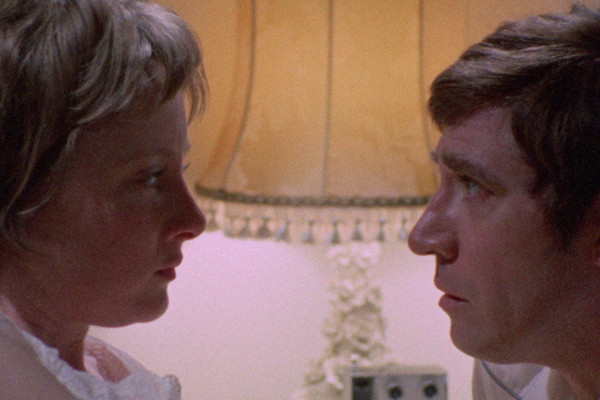
The Lie actually fell under Graeme McDonald, and was a BAFTA-winning adaptation of an Ingmar Bergman script. Although Bergman only wrote it (it was directed by Alan Bridges) it still maintains that deliberately mannered, clinical air of so many of his works. Translated into English and with an English setting, it's not going to be for everyone, particularly those who are reliant on incident. Yet this "slow burn" tale of a failing marriage and affairs brings much, if you're prepared to let it.
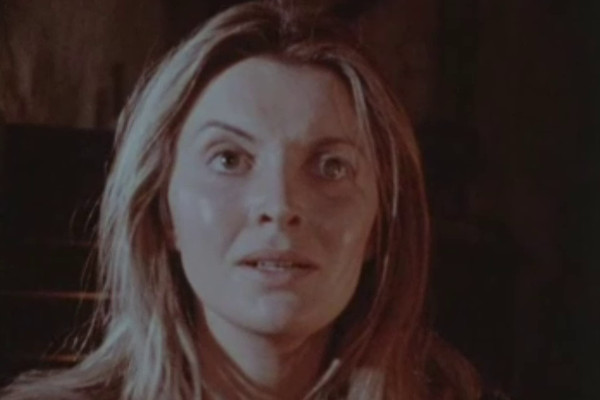
Orkney is a feature-length adaptation of three short stories set in the Orkney Islands by poet George Mackay Brown. A Time To Keep - Set in 1921, featuring Maurice Roëves as an ostracised man attempting to support his pregnant wife amid suspicion and hostility; The Whaler's Return - Set in 1871 with Stuart Mungall; and, perhaps the pick of the bunch, Celia, set in the then-present, with Hannah Gordon playing a woman using sex in order aid her addictive reliance on alcohol.
As discussed elsewhere, finding out the viewing figures for Play For Today is sometimes harder than it should be, as it aired during a time when outlets were only usually printing the national Top 20, and it's not a show that reached those levels. As also discussed, the audience isn't important in relation to the quality of a programme, this is just trivia mentioned out of interest.
But occasionally publications like The Stage might cite the odd rating here and there, and with Orkney we're blessed. The Stage reported on the overall viewing figures for the first run, citing them as being around 6.5 million (so just about half a million higher than the average for the Shubik-only productions) and credited Orkney with an audience of 8 million.
If you'd like to buy me a coffee for this research into Play For Today, then the button is below, but if you don't... that's fine, too, and I hope you enjoyed the article.